
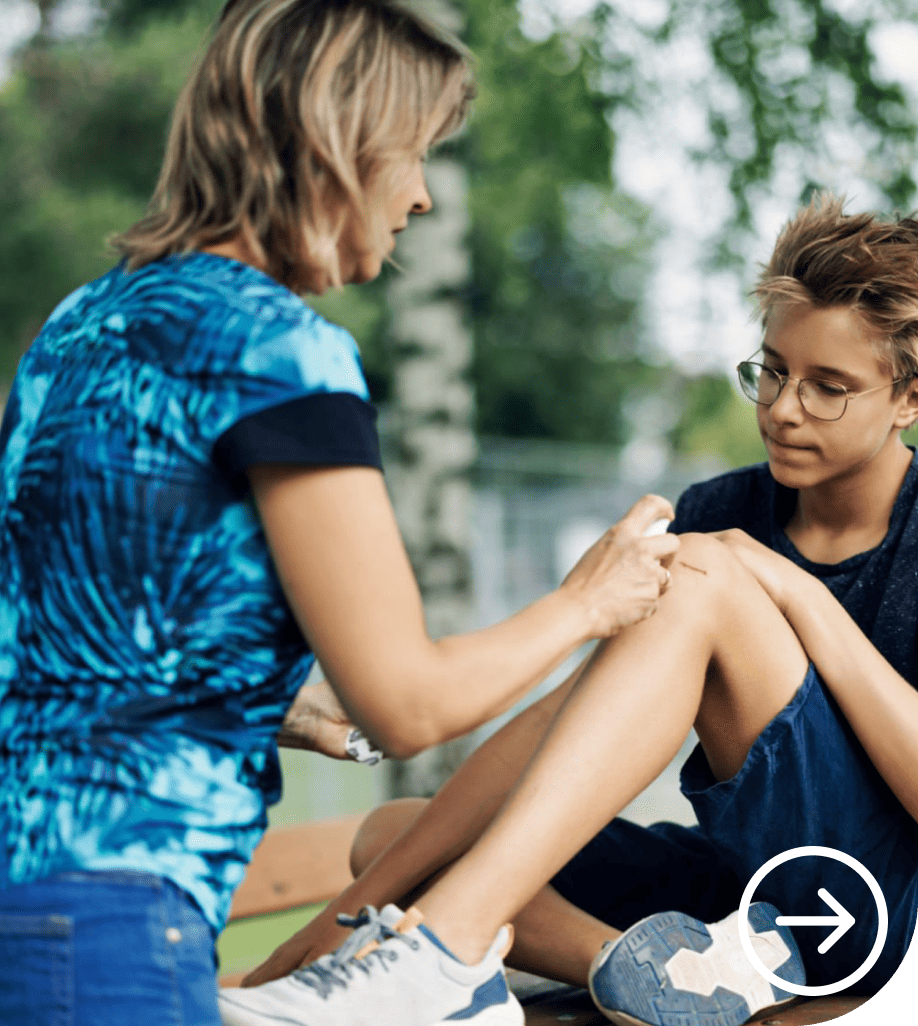
A small cut or scrape: How do you clean, disinfect, and protect a wound?
A cut while cooking, a scrape from a fall, or an injury while gardening usually requires simple first aid. But it's important to follow the correct steps.
These guidelines apply only to superficial, shallow, and small wounds.
Check to see if it is a superficial wound
A minor wound can usually be treated at home when:
the bleeding remains minimal,
its edges are slightly apart,
that no deep foreign body is visible.
Medical advice is necessary when:
The wound is deep, extensive, and heavily soiled,
The wound is located near the eye,
The injury was caused by a bite,
The bleeding is persistent.
Special caution is also required for people with diabetes, those who are immunocompromised, or those taking anticoagulants.
Finally, be sure to check that your tetanus vaccination is up to date, especially after an injury contaminated with dirt or debris.
Cleaning: The Top Priority
Before providing any care, wash your hands thoroughly. Next, rinse the wound under a gentle stream of room-temperature water, then clean it with soap and water to remove blood, dirt, and debris.
For a clean, superficial, and small cut, this cleaning may be sufficient. Use a gauze pad rather than cotton, as the fibers can get stuck in the wound.
If the wound is bleeding, apply continuous pressure with a clean compress until the bleeding stops.
Disinfect when the situation warrants it
An antiseptic is not a substitute for cleaning; it is a complementary measure. It can be used to supplement wound care when the wound is dirty, exposed to a contaminated environment, or when its use has been recommended by a healthcare professional.
The National Health Insurance program specifically advises against applying alcohol directly to a cut: it can cause intense pain and delay healing.
The comfort of an alcohol-free, water-based formula.
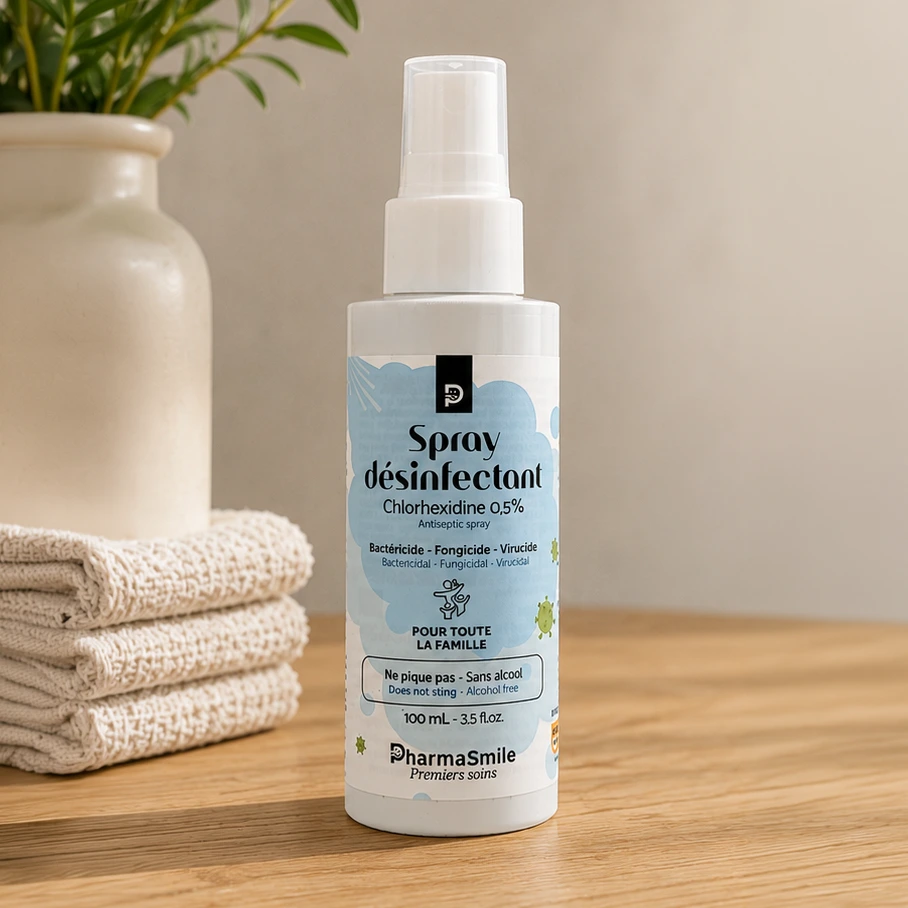
The PharmaSmile Antiseptic Spray contains 0.5% chlorhexidine digluconate. Its alcohol-free formula is designed to make it easy to care for small, superficial wounds: it doesn’t sting and doesn’t stain clothes.
It eliminates 99.9% of bacteria and viruses for a pain-free disinfecting effect.
After cleaning the wound, spray the product from a distance of 5 to 10 cm, using enough to cover the area. Let it sit for 5 minutes and do not rinse.
Read the usage instructions on the packaging carefully before use.
Which bandage should you choose based on the type of wound?
Once the wound is clean and the surrounding area is dry, the dressing acts as a physical barrier against friction, dirt, and external irritants. Its size and material must be appropriate for the size of the wound, its location, and the planned activities.
For Common Cuts
A small cut on the finger, a scrape on the arm, or a minor injury at home do not all require the same level of care.
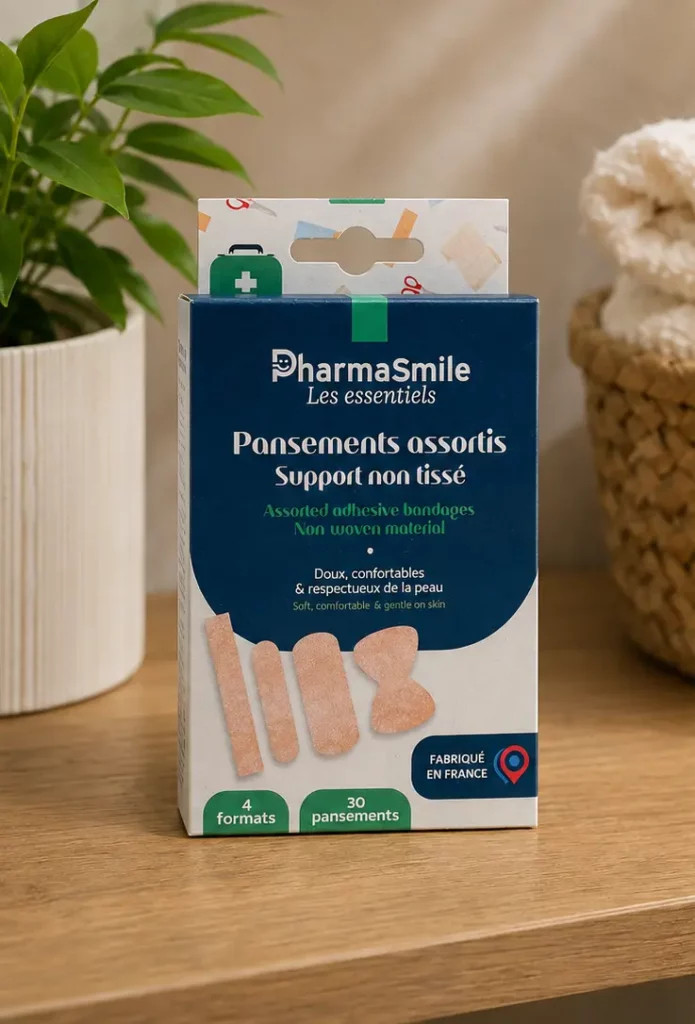
The box of PharmaSmile Assorted Band-Aid Box box contains 30 bandages in 4 sizes. Their nonwoven backing is designed to protect superficial wounds while providing a comfortable fit. This variety of sizes makes them a practical choice for putting together a family first-aid kit.
For an area exposed to moisture
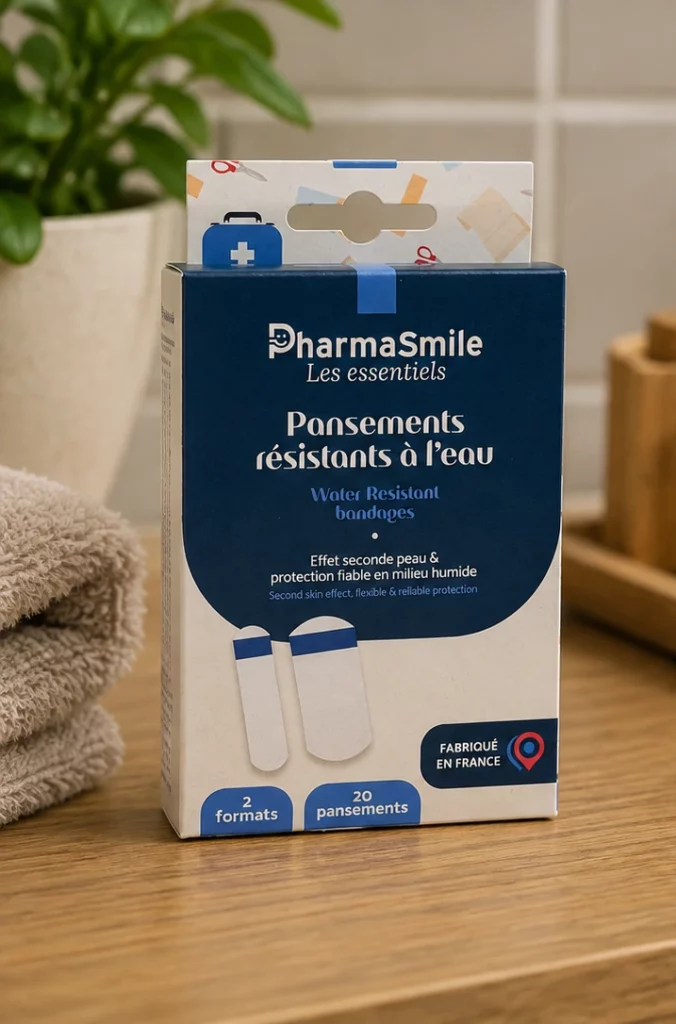
Showering, frequent handwashing, or a damp environment: a standard bandage can quickly lose its adhesion.
Water-resistant bandages are clear and feel like a second skin. They are flexible and move with you while providing adequate protection in wet conditions. The box contains 20 bandages in 2 sizes.
To adjust the format precisely
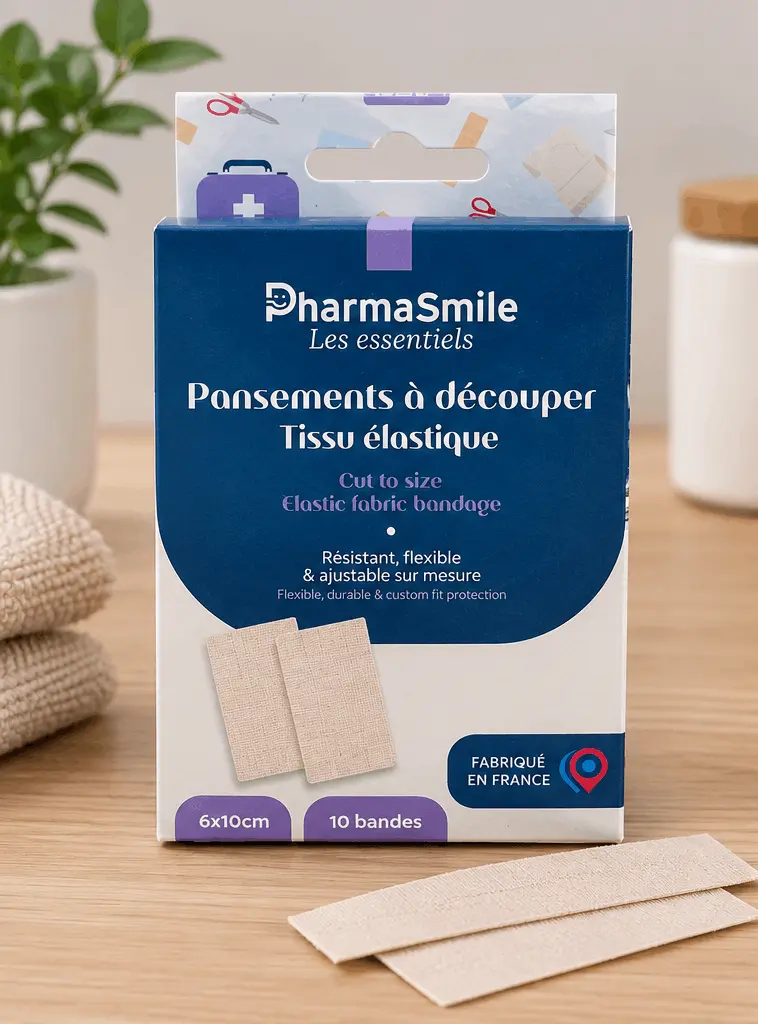
Some areas are harder to cover with a standard size: joints, the side of the hand, the forearm, or larger areas of skin.
PharmaSmile cut-to-size bandages come in 6 × 10 cm strips. Their adjustable size allows you to cut them to the desired length, while their elastic fabric moves with you.
For a minor wound in a child
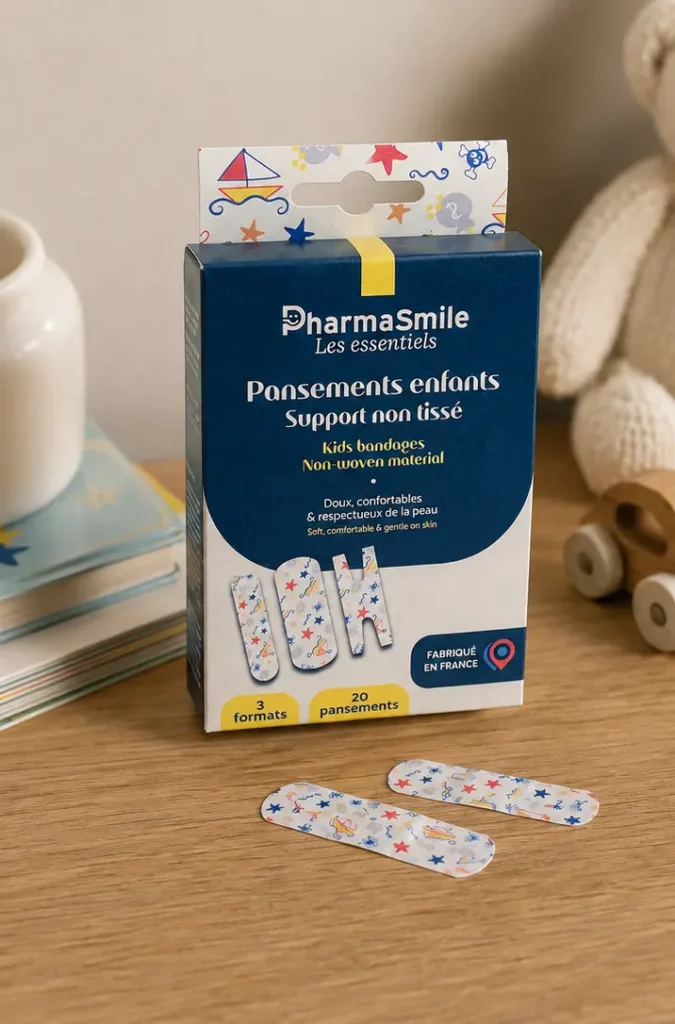
For kids, it's the design of the bandage that matters most. We all know that pretty bandages help you heal faster!
Children's PharmaSmile children’s bandages feature a nonwoven backing and cute pirate designs. Each box contains 20 bandages in 3 sizes to treat the most common minor cuts, scrapes, and superficial wounds.
These four products should not be used on a deep, infected, or larger-than-the-pad wound.
Change the bandage and monitor the condition
Change the dressing when it is damp, soiled, coming loose, or saturated. At each dressing change, check the wound for signs of healing.
Spreading redness, increasing pain, swelling, yellowish or greenish discharge, fever, or failure to heal are signs that you should seek medical advice.
The Four Key Steps to Remember
To treat a small, superficial wound:
– Clean thoroughly,
– Disinfect if necessary,
– Cover the area with an appropriate bandage
– Keep an eye on how things develop.
If you're unsure about the nature of the wound or which antiseptic or bandage to use, ask your pharmacist for advice.