Winter moisturizing: understand your skin and adopt the right reflexes
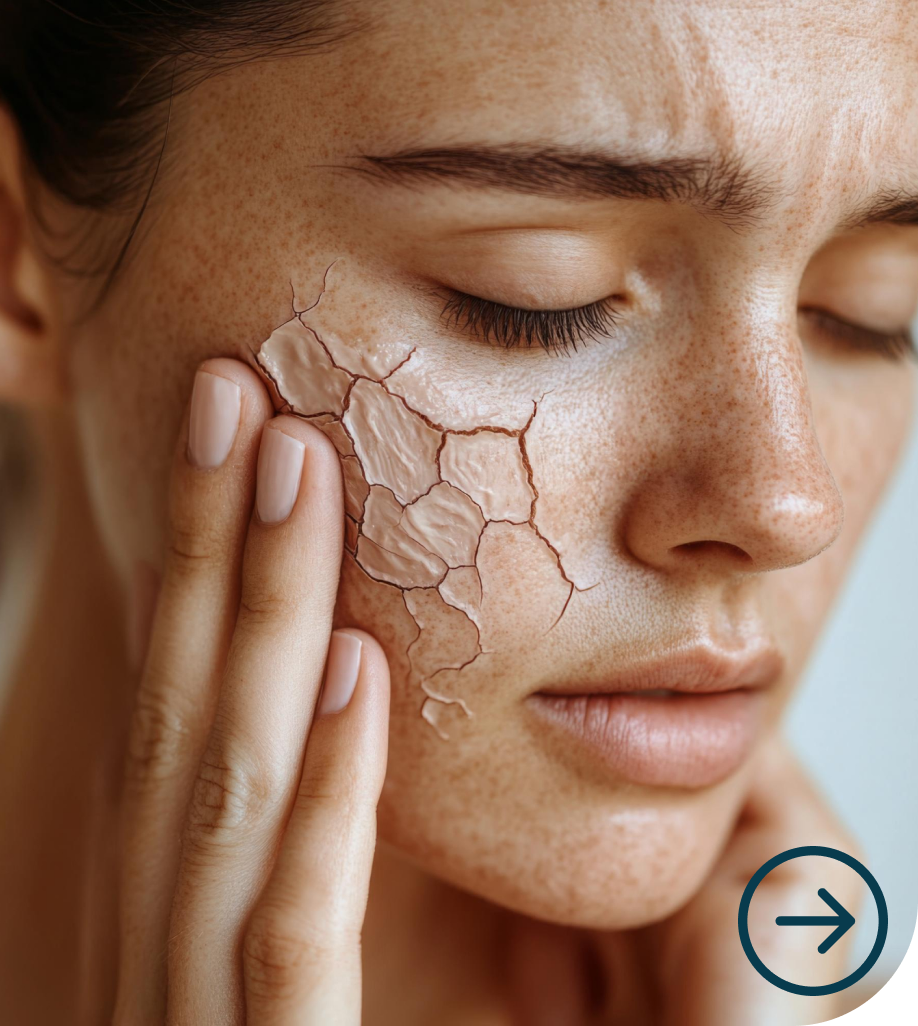
In winter, skin feels tight, itchy and peeling, sometimes to the point of cracking. This skin dryness affects all skin types, including combination skin, and is particularly marked in people with atopic skin, making winter skin moisturizing essential.
A study of atopic skin showed that over a third of flare-ups (36%) occur in winter, compared with just 11% in autumn.
And with good reason: when the skin barrier is weakened, water evaporates more quickly, the skin becomes more reactive and discomfort sets in.
This article helps you better understand what happens to your skin in winter, and offers concrete advice on how to preserve moisture, especially if you have dry or atopic skin.
1. Why does skin dehydrate more in winter?
Several external factors combine during the cold season to weaken the skin barrier.
Cold + dry air = weakened skin barrier
Cold, dry winter weather reduces sebaceous gland activity and depletes the protective lipid film. Wind accentuates evaporation of water on the skin's surface and mechanically attacks the most superficial layer. Studies show that these conditions increase water loss and skin roughness.
Indoor heating and lack of humidity
Indoors, heating reduces the relative humidity of the air. The drier the air, the more it "pumps" water from the surface layers of the skin.
Air quality experts remind us that in winter we spend up to 90% of our time indoors,where heating significantly reduces the relative humidity of the air.
A study shows that after six hours' exposure to heated, low-humidity indoor winter air, water loss increases significantly and skin becomes drier and rougher.
Frequent washing, hot showers, aggressive surfactants
Hygiene habits can amplify this dehydration.very hot showers prolonged baths and repeated hand washing strip away the hydrolipidic film and promote skin drynessespecially when aggressive or highly alkaline cleansers are used. For people with dry skin or atopic skin this overstressing of the skin barrier can trigger or aggravate eczema flare-ups.
2. Where does hydration come in?
Moisturization takes place mainly in the skin's outermost layer, the stratum corneum part of the epidermis.
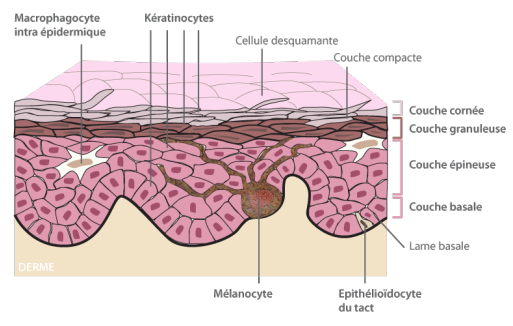
- Hydrolipidic film (surface) On the surface, the hydrolipidic film is a mixture of water (sweat) and lipids (sebum and epidermal lipids). It forms a protective veil that limits water evaporation and shields the skin from external aggressors. When this film is altered by cold, wind, hot water or aggressive surfactants, the skin loses water more easily.
- Corneal layer (stratum corneum)
Just below, the stratum corneum is often described as a brick wall. The "bricks" are the corneocytes, dead cells filled with keratin and natural hydration factors capable of retaining water. The "cement" is made up of organized lipids that seal the skin barrier. - Living epidermis and dermis (below)
The deeper layers (granular, spinous and basal layers) ensure cell renewal, vascularization, collagen production, etc.
In dry skin, and even more so in atopic skin, this organization is disrupted: there is a deficiency of certain lipids and barrier anomalies that facilitate cutaneous dryness and itching. Moisturizing and emollient skin care products that target the stratum corneum aim to restore this lipid cement and help the skin retain water, particularly during winter.
3. Healthy reflexes for well-moisturized skin in winter
Switch to "gentle shower" mode
- Prefer lukewarm water rather than hot showers.
- Limit shower duration.
- Use mild, gentle shower gelsthat respect the hydrolipidic film.
Hot water and aggressive cleansers increase skin dryness.
Moisturize systematically after showering
- Dry yourself by dabbing, not rubbing.
- Apply cream or body lotion within 3-5 minutes after showering to "trap" water in the stratum corneum.
Pamper hands and lips
The hands and lips are very exposed to cold, wind and washing, and have fewer sebaceous glands. They deserve special attention.
- The skin of the hands get dry and cracks crack easily in winter.
- The lips lack a clean hydrolipidic film. They quickly become chapped and require special attention.
That's why we recommend a nourishing lip balm and a protective hand cream, to be applied several times a day.
Taking care of your home's air too
Indoor air quality also plays a role. Airing your home several times a day and, if necessary, using a suitable humidifier can help limit air confinement and certain humidity-related problems. Regular air renewal is important for comfort and health.
Drink enough...
Official recommendations state that an adult should drink at least 1.5 to 2 liters of water a day, taking into account body size, physical activity, ambient heat and special situations (pregnancy, breast-feeding, advanced age).
Part of this intake comes from food (around 20-30%), the rest from beverages (water, herbal teas, broths, etc.).
The important thing is to maintain a simple reflex: drink regularly throughout the day, without waiting until you're thirsty.
4. The PharmaSmile selection for a gentle winter
Some of our products can help to protect the skin barrier and provide comfort to the most exposed areas during winter.
All our solutions are dermatologically tested, and can be used by the whole family from age 3, composed of a large majority of ingredients of natural origin and are made in France.
Gentle cleaning
In winter, it's important not to "strip" the skin when cleansing the face.
PharmaSmile® Aloe Vera & Rose Floral Water Micellar Water has been formulated for all skin types, including sensitive skin :
- gently cleanses and removes make-up,
- moisturizes and soothes thanks to organic aloe vera and organic rose floral water,
- respects skin's natural balance without leaving a greasy film,
- it requires no rinsing, which limits exposure to hard or hot water.
Protect your lips
Lips are among the first victims of the cold: they have almost no hydrolipidic film and dry out very quickly.
Aloe Vera Lip Balm PharmaSmile combines several ingredients of natural origin to nourish and protect:
- Shea butter and castor oil Intense nourishment and repair for dry, chapped lips,
- Lipids and soothing active ingredients : provide comfort, softness and a soothing effect.
Comforting hands
Hands are on the front line: frequent washing, hydroalcoholic gel, cold air, wind...
Aloe Vera Hand Cream PharmaSmile is formulated to moisturize, nourish and protect dry hands and nails:
- Aloe vera, shea butter, vegetable oils and calendula extract Moisturize and nourish dry hands without a greasy feel,
- Apply several times a day for the comfort and suppleness of weakened skin.
In the shower
The cleansing phase is often the moment when the skin barrier is most damaged (water too hot, aggressive products). Aloe Vera Aloe Ver shower gela :
- A gentle formula, without harsh surfactants, that respects the skin's balance,
- enriched with organic aloe vera and hydrolyzed rice proteins, cleans without stripping
A good ally for putting the "gentle shower" advice into practice: a cleanser that washes without stripping.
Conclusion:
Winter doesn't have to be hard on the skin. By understanding how cold, dry air, heating and certain habits weaken the skin barrier, it becomes easier to take action on a daily basis. By combining lukewarm showers, gentle cleansers, systematic moisturizing after washing, hand and lip protection, attention to indoor air quality and sufficient oral hydration, it's possible to limit skin dryness and keep skin supple and comfortable, even in the dead of winter.
Care products developed by pharmacists, such as those in the PharmaSmilerange, can help put this advice into practice and support dry and atopic skin during this particularly demanding period for skin hydration.
Useful resources :
Park EH, Jo DJ, Jeon HW, Na SJ. Effects of winter indoor environment on the skin: Unveiling skin condition changes in Korea. Skin Res Technol. 2023 Jun;29(6):e13397. https://pmc.ncbi.nlm.nih.gov/articles/PMC10264749/
Cahuzac C., Qualité de l'air intérieur, quels risques pour notre santé, ARS, October 2023. https://www.hautes-pyrenees.gouv.fr/contenu/telechargement/15984/112431/file/2023_QAI_quels%20risque_ARS.pdf
Robert J, L'Hiver est là : Hélas pour la peau?, Brèves d'expert, January 2017, https://allergolyon.fr/wp-content/uploads/2020/07/6.hiver-est-la-helas-pour-la-peau-seche.pdf
Ameli. Water, a food in its own right. Assurance Maladie, consulted in 2025. Available athttps://www.ameli.fr/indre-et-loire/assure/sante/themes/alimentation/alimentation-adulte/alimentation-adulte-types-aliments/eau